

LEADING THROUGH CHANGE: COOPLANDS BAKERY
COOPLANDS

The Context
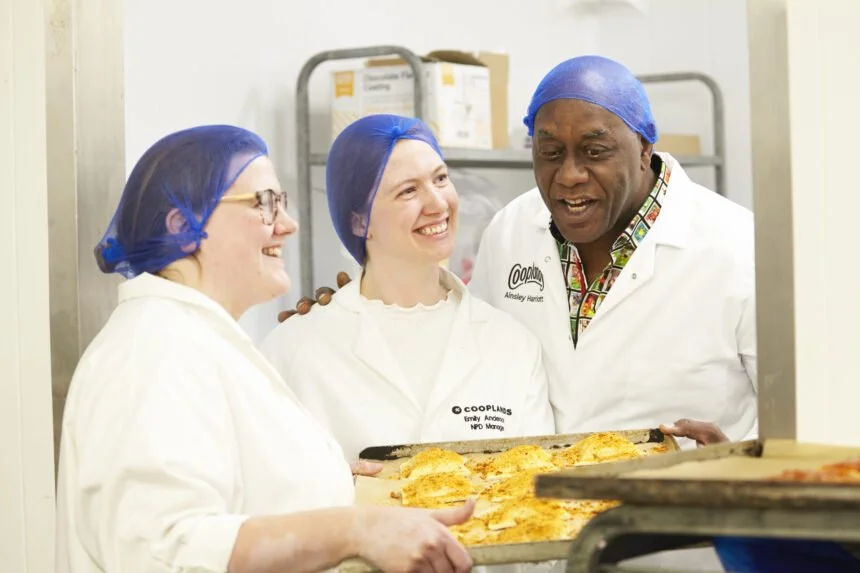
Cooplands Bakery has been a fixture of British high streets since 1885 - established in Scarborough, built on quality products, and defined by the people who kept it running for over 130 years. Then came the acquisition.
The EG Group - the global petrol forecourts and convenience retail business owned by the Issa brothers from Blackburn, who now also hold a majority stake in Asda - acquired Cooplands. Initially they took a hands-off approach. That was about to change.
By the time Russell was engaged, the 30 Area and Regional Managers attending the programme could feel what that shift meant. Structures were moving. Reporting lines were changing. The autonomy they had built their careers around was being replaced by a different kind of accountability. One delegate described it plainly: "the hand of a huge Corporation on their shoulder."
This wasn't simply a leadership development programme. It was a strategic intervention at a moment of genuine organisational pressure - designed to build the confidence, resilience and capability of leaders who needed to hold their ground, and bring their teams with them, in the middle of significant change.
The Brief
The development needs were identified through Talent Management and Succession Planning work within the business. The key themes requiring development included:
Communication — across functions, upward and downward
Leading rather than managing — making the shift from task to people
Coaching skills — enabling and empowering rather than telling
Motivation and drive — reconnecting leaders to purpose under pressure
Confidence — particularly around uncertainty and change
Optimistic and resilient mindset — sustaining performance in volatile conditions
Creativity, innovation and analytical problem-solving
Influencing, decision-making and leading change
Russell also designed and delivered a parallel programme for the Line Managers (Directors) of those attending — 6 Directors in total — to ensure:
They understood the content their people were receiving
They could enable and reinforce application of learning in daily practice
They were equipped to coach, support and provide useful feedback
They could remove blockages and celebrate progress
HOW DELEGATES FELT AT THE START
Mentimeter data from the opening sessions gives a clear picture of the emotional state delegates arrived with. This baseline data is important: it shows what Russell was working with in the room.
Cohort 1 — Opening Session (July 2022)
Top words from delegates when asked how they felt about the Programme:
"Excited" (3 delegates), "Good" (3), "Optimistic" (2), "Interested" (2)
Also present: "overwhelmed", "curious", "eager", "thought-provoking"
The presence of "overwhelmed" alongside "excited" is telling. These were leaders who wanted to develop — and felt the weight of what was being asked of them at the same time.
Cohort 2 — Opening Session (October 2022)
Cohort 2 delegates described their opening feelings as:
"Interested" (4 delegates), "Positive" (3), "Optimistic" (2), "Involved" (2)
Also present: "intrigued", "keen", "excited", "good to mingle with others"
A notably warmer opening than Cohort 1 — possible evidence that word had got back about the programme's quality. Zero negative terms appeared in Cohort 2's opening responses.
Leadership Shadow Module — Cohort 1 (12 Delegates)
At the start of the Leadership Shadow module, delegates described their feelings as "excited" (5), "interested" (4), "learning" (3), "leadership" (3), "uncertain" (2), "upskilling" (2). The word "uncertain" is significant — this was a group stepping into something genuinely new, not a tick-box training day.
Baseline confidence scores for this cohort:
Confidence in role: 3.9/5
Confidence in leadership purpose: 3.8/5
Confidence using strengths: 3.7/5
By the end of the same session, all three scores had risen:
Confidence in role: 4.3/5
Confidence in leadership purpose: 4.2/5
Confidence using strengths: 4.3/5
That is a measurable shift in confidence within a single module. Not a long survey weeks later — immediate, in-room evidence of impact.
The Approach
Starting with Strengths: Strengthscope
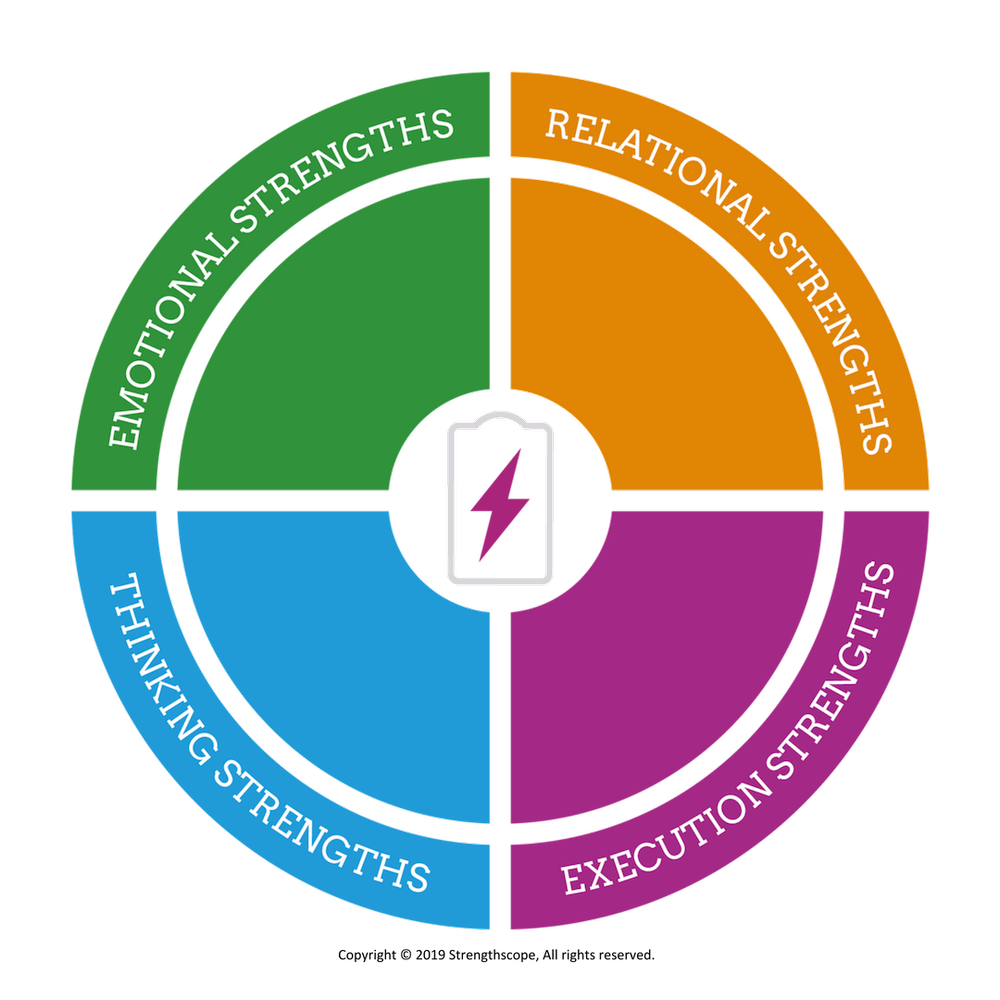
The programme began before anyone entered a room. Every participant completed the Strengthscope psychometric assessment — one of the most evidence-based strengths profiling tools available. Each leader received a personalised report identifying their "Significant 7" strengths — those attributes that most energise them and drive their peak performance.
Strengthscope became the foundation for Personal Development Plans, leadership approach and self-awareness. Crucially, it gave leaders a language to understand themselves and each other — particularly important when operating under acquisition pressure, when strengths can easily tip into overdrive.
The Scope of Work
Russell designed and delivered a multi-layered programme spanning three distinct levels of intervention:
| Module | Key Content |
|---|---|
| Module 1 | Leadership Purpose, Leadership Shadow, Strengths-Based Leadership, Contracting Triangle, Comfort/Stretch/Panic Zones |
| Module 2 | Your People — Leading People, Emotionally Intelligent Leader, Delegation, Coaching Skills, Feedback Models |
| Module 3 | Leading Rather Than Managing, Creativity & Innovation, Problem-Solving, Analytical Thinking, Stakeholder Influencing |
| Module 4 | Leading Change, Navigating VUCA, Peak Performance Skills, Commander's Calm, Decision Making, Adaptability |
| Module 5 | GROW Coaching Model, Push/Pull Strategies, Resilience Wheel, BiP Celebration & Presentations, ROE and ROI |
Confidence to Apply Learning - Full Data Across All Modules.
Every module was evaluated using anonymous Mentimeter feedback. The question "I am confident I will be able to apply learning from today" was asked on a 1-5 Likert scale. Below is the complete picture across all sessions:
| Your People Module — Cohort 1 (Aug 22) | 4.6/5 | Exceptional |
| Coaching Module — Cohort 1 (Oct 22) | 4.8/5 | Exceptional |
| Leading Change — Cohort 1 (Sep 22) | 4.3/5 | Very Strong |
| Opening / Leadership Shadow — Cohort 1 (Jul 22) | 4.4/5 | Very Strong |
| Opening / Leadership Shadow — Cohort 2 (Oct 22) | 4.3/5 | Very Strong |
| Your People / Resilience — Cohort 1 (Sep 22) | 4.3/5 | Very Strong |
| Leading Change — Cohort 2 (Jan 23) | 4.1/5 | Strong |
| Resilience & Feedback — Cohort 2 Module 3 | 4.0/5 | Strong |
| Coaching Module — Cohort 2 (Feb 23) | 4.0/5 | Strong |
Every module scored above 4.0 out of 5. The programme low is 4.0. The programme high is 4.8. The average across all sessions is 4.3/5. These are not small sample anomalies — they represent consistent, repeated evidence of learning that sticks.

The Before and After: Leading Change Module
The Leading Change data provides some of the most compelling evidence in the entire dataset — because it captures a genuine psychological shift within a single session.
Before the Module: How delegates felt about change
Top words — Start of session
▸ Nervous (3)
▸ Excited (2)
▸ Optimistic (2)
▸ Overwhelmed
▸ Challenges
▸ "Can be daunting"
Top words — End of session
▸ Confident (2)
▸ Optimistic
▸ Re-energised
▸ Not afraid
▸ Relaxed
▸ "Looking forward"
▸ Embrace
In the space of one day, "nervous" became "confident." "Daunting" became "looking forward." "Overwhelmed" became "re-energised." The Cohort 2 data echoes this: "nervous, overwhelmed" at the start became "excited (3), embrace, optimistic, moving forward" by the end.
This is what good resilience facilitation looks like. Not pretending the pressure isn't real. Equipping people to move through it and spring forward with learning.

Facilitator Feedback: What Delegates and Directors Said About Russell:
Across all 12 PDFs — delegates and Directors, both cohorts, every module — participants were asked what they enjoyed about the facilitator's style and what they would like done differently. The data below is drawn directly from Mentimeter responses.

What They Said — Delegates
“Infectious enthusiasm.”
“Flamboyant and energised.”
“Doesn't make you feel daft when you ask a question — he answers in a way you understand.”
“Keeping it fun and engaging — bags of relevant knowledge.”
“Good at bringing us back in the room and breaking things down to a level of understanding.”
“Engaging, interactive, pleasant, comfortable, relaxed, informative.”
“Didn't impose interaction — respected each candidate's personality. Didn't make us do awful role play.”
“Personalised approach — understanding everyone is unique.”
“Tried to make the day as fun and educational as possible.”
“Shared stories, kept interest all day.”
“Keeps the room interested, and has everyone participating.”
“Friendly, relaxed — challenges thought process.”
“Engaging everyone. Inclusive.”
What They Said — Directors (Line Manager Programme)
The Directors' own Mentimeter sessions asked the same question about Russell's facilitation of their programme:
“Approachable, Positive and engaging — able to explain in a number of ways.”
“Engaging, energetic — makes you feel comfortable to tell the truth.”
“Good mix of practical exercises and verbal discussions.”
“Openness to chat about real life scenarios. How you link it back to topics in other sessions.”
“Upbeat and sense of humour. Good and relevant conversations.”
“Love your style.”
What Would They Like Russell to Do Differently?
Across all sessions, the overwhelming response to this question was "nothing." Across delegates and Directors:
"Nothing" / "N/A" / "No" / "All good" — the dominant response in every single session
Logistical requests only: water on tables, snacks, air conditioning, parking
Occasional humorous requests: "bring wine", "red velvet cupcakes with your kitchen aid", "energy dances", "more glitter", "free wine gums", "smile for a picture more"
"Nice waistcoat" and "terrible shirt" - the group had clearly warmed to him
The only substantive piece of feedback across 12 sessions: one delegate asked for course slides to be sent after the session. Three delegates agreed. That is a reasonable ask and a simple fix.
The absence of substantive criticism across an entire 9-month programme — from a group of operational leaders who are known to be sceptical of corporate training — is not a coincidence. It reflects a facilitator who has calibrated his style precisely to this kind of group.
The Line Manager Programme: A Programme Within a Programme
The 6 Directors attending the LM programme had their own arc of confidence — separately tracked through Mentimeter. This data is particularly valuable for prospective clients considering whether to invest in aligned LM support.
LM Module 2
4.4 / 5
Capable supporting people
3.7 / 5
Confident supporting people
LM Module 3/4
4.5 / 5
Capable supporting people
4.7 / 5
Confident supporting people
The Directors' confidence in supporting their own people through the programme rose from 3.7 to 4.7 across the LM sessions — a 27% increase. Their sense of capability rose from 4.4 to 4.5. By the final session they were setting structured coaching 1-2-1s, using the GROW model, actively discussing BiP progress, and feeling both confident and capable of removing barriers for their people.
One Director captured the EG Group pressure directly in the "further support" section: "More information on the direction of the business in the future. Where priorities lie." This is a leadership team operating in real uncertainty, doing their best to support people below them while navigating pressures from above. The programme gave them a framework and a language to do that better.
The Business Improvement Plan: Where Learning Met the P&L
£500,000
Provable, real-world return on investment from delegate Business Improvement Plans
1,100% Return on Programme Investment
Every delegate completed a Business Improvement Plan — a real, costed, business-relevant project that demonstrated the financial application of their learning. This wasn't a hypothetical exercise. These were live improvement initiatives, scoped, planned and measured within Cooplands' actual operation.
The Mentimeter data tracks the BiP journey across cohorts. In early sessions, when asked "how are you doing with your BI Activity?", delegates described being "nervous", "stressed", "unsure", "don't have a clue". One responded with three wine glass emojis. Another: "stressing, thinking."
By later sessions, the language had changed entirely: "well on track", "increased sales", "in process", "progressing", "speaking with teams", "creating a plan".
At a culminating Celebration Event, each leader presented their BiP to colleagues and senior stakeholders. Collectively the cohort delivered half a million pounds of provable, real-world ROI — a 1,100% return on the programme investment.
This is the feature of the programme Russell is most proud of — and rightly so. Most leadership development struggles to prove financial value. The BiP removes that problem entirely. Delegates didn't just learn. They built the business.
PROGRAMME ANALYSIS: WHAT WORKED, WHAT TO STRENGTHEN
What Worked Best
Coaching tools dominated the "most useful models" responses throughout — GROW model, push/pull strategies, "hold the silence", coaching questions. Delegates immediately saw practical application
The Resilience Wheel, VUCA framework and Peak Performance Skills were consistently cited across both cohorts as the most practically useful change-navigation tools
The Leadership Shadow and Contracting Triangle generated the most immediate action commitments — delegates left with concrete team meeting plans
Breakout group work was valued throughout. The psychological safety of learning with peers was critical for this group
Grounding content in Cooplands' actual operational reality was appreciated across all sessions — delegates flagged when they wanted "something specific to our sector"
The Strengthscope foundation gave delegates a shared language for self-awareness and peer understanding that carried through all subsequent modules
Areas for Development and Refinement
Line Manager engagement with pre-module preparation was inconsistent early on — in early sessions, more delegates had NOT spoken to their LM beforehand than had. This improved significantly over time (Module 5 showed 9/12 delegates had discussed the module with their LM before attending, vs 3/9 at Cohort 2 opening). The LM programme clearly worked — but front-loading it more explicitly would strengthen transfer further
BiP anxiety was highest in Cohort 2 Module 3 — this is the point where the project was becoming real and delegates felt "nervous, stressed, unsure." Earlier structured BiP scaffolding, possibly as early as Module 2, would reduce this
One consistent theme from the "what to do differently" responses: delegates wanted slides or course materials sent after sessions. This is a simple fix with significant perceived value
Time and operational pressure were cited as barriers to applying learning — "time to put the learning into practice" and "work constraints" appeared in confidence-influencing responses. Worth considering lighter-touch between-session touchpoints to maintain momentum
A small number of delegates wanted more active group work and mixing of groups — worth building into future programme design as an explicit structural element
Summary of Outcomes
30 Area and Regional Managers developed across a 9-month modular programme
6 Directors supported through a parallel Line Manager programme with measurable confidence improvements
Confidence to apply learning scored above 4.0/5 in every single module — programme average 4.3/5
Measurable shift in confidence scores from start to end of individual modules, including within single sessions
Before/after data on change attitudes: "nervous, daunting" → "confident, re-energised, looking forward"
Director confidence in supporting their people rose from 3.7 to 4.7 across LM programme
GROW model, Resilience Wheel, push/pull and leadership shadow tools embedded in daily practice
Delegation and strengths-based leadership language adopted across both cohorts
Psychological safety created — delegates described feeling able to "tell the truth" in the room
£500,000 of provable business improvement from delegate-led BiP projects
1,100% Return on Investment on the programme cost
Culture of continuous improvement and peer accountability established
Facilitator received substantive critical feedback in fewer than 1% of all responses across 12 sessions
READY TO MOVE FORWARD?
READY TO BUILD RESILIENT LEADERS IN YOUR ORGANISATION?
Russell Harvey works with senior leadership teams navigating change, pressure and uncertainty.
From individual resilience coaching to whole-organisation development programmes.